Digital Radiography
Digital (DR) are modern types of Radiographic Testing.
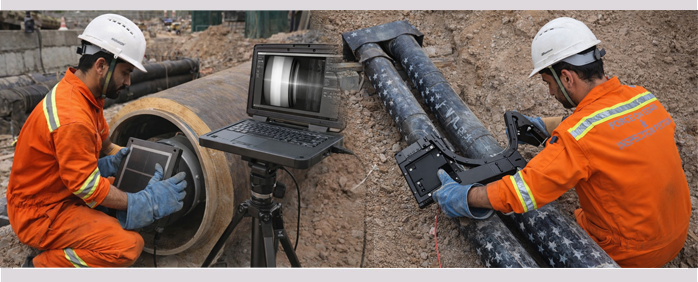
Digital radiography is an advanced technology based ondigital detector systems in which the X-ray image is displayed live on a computer screen without the need for developing chemicals or intermediate scanning.
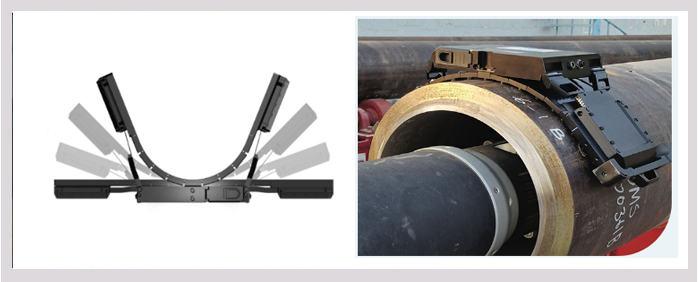
DR uses a Digital X-ray detector to automatically acquire images and transfer them to a computer for viewing. It is capable of fixed or mobile use. Certain advantages include faster image capture, better quality images and high volume capacity
Compared to other imaging devices flat panel detector provides high quality digital images with better signal to noise ratio and improved dynamic range, which in turn provides high sensitivity for radiographic application. A component with varying thicknesses and densities can often be X-rayed in a single digital radiographic image, using the high dynamic range to pick out subtle variations in thick and thin sections alike.
Digital radiography displays the X-ray image directly on the computer screen allowing the user to see instantly whether the shot has been optimally setup and to alter rapidly the orientation of the part, often remotely using the built-in manipulation system, to reveal the detail required.
Compared to film radiography, where it can often take over 10 minutes to produce radiograph from the point of exposure, digital radiography can reveal the inner features of a component in a matter of seconds. Typical Applications
Useful where digital images of components are required, especially to save storage space and ease of handling. Also useful where ease of processing and viewing is necessary.